


How to Set Up a Perfect Montessori Kindergarten Classroom
release time:
2024-06-28 14:00
source:
How to Set Up a Perfect Montessori Kindergarten Classroom

As an experienced producer of Montessori teaching aids, we suggest that you may consider the following aspects when designing a Montessori kindergarten classroom to ensure that you find an environment that promotes the holistic development of each child and is in line with the Montessori educational philosophy:
Order and Clarity
The classroom should be well organised, with items clearly categorised and neatly arranged. Teaching aids are located so that they can be easily accessed and returned, which helps children develop a sense of order and responsibility.
Aesthetics and Harmony
The environmental design should be simple but not monotonous, with soft and harmonious colours, avoiding too much visual stimulation and creating a calm and attractive learning space. The use of natural light and indoor plants can add a sense of warmth and closeness to nature to the environment.
Appropriate Furniture Size
All furniture and tools should be adapted to the child's body size, e.g. low bookshelves, small tables and chairs, so that the child can easily operate and move independently, promoting the development of self-reliance. Below are a few specific examples of how to apply appropriately sized furniture in a classroom:

1. Tables and chairs: The height of tables and chairs in a Montessori classroom is designed to match the child's size. Generally, when a child sits down, they are able to place their feet flat on the floor with their knees bent at 90 degrees, which ensures good sitting posture and reduces the discomfort associated with sitting for long periods of time. Desktop height is approximately below the child's elbow, ensuring they can easily write or manipulate teaching aids without shrugging or bending over.
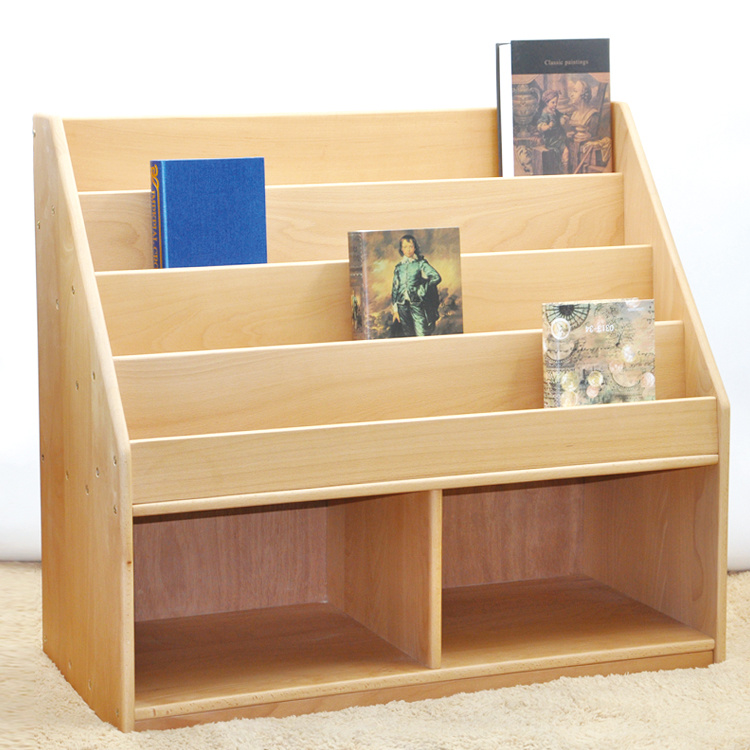
2. Shelves and lockers: Shelves and lockers should be at a height that allows children to pick up and put back items on their own, often with the bottom shelf not far from the floor, making them easily accessible to even the youngest toddlers. This design encourages children to manage their own belongings and develops a sense of responsibility and independence.
3. Hand-washing stations and sinks: If possible, low hand-washing stations or small sinks allow children to practice daily living skills (e.g., washing hands and dishes) without adult assistance, which helps them develop self-care skills.
4. Beds: In kindergartens that require napping, beds should be designed with the child's size in mind to ensure that the child can get in and out of the bed easily and that the beds are not too high so that the child does not fall off.
5. Display shelves and walls: Shelves for displaying children's work or teaching aids should be of a suitable height to ensure that children can see and engage with what is on display and feel valued for their achievements.
6. Storage of teaching aids: Each teaching aid should have its own fixed storage location that is easily accessible to children. For example, sensory aids can be placed in lower drawers or on open shelves where they can be seen at a glance and easily removed.
Through these specific design details, the Montessori classroom not only creates physical convenience, but more importantly, creates a psychological sense of security and belonging, allowing children to feel that this is a space that belongs to them, and thus participate more actively in the learning process.
Space for Free Exploration
The classroom should have enough open space for children to move around freely and choose their own work areas, whether working individually or in small groups. Areas are clearly delineated, e.g. sensory, maths, language, culture and daily living skills, yet smooth transitions are maintained between areas.
Enriched Montessori Teaching Aids
Provide a complete range of high quality Montessori teaching aids that are well designed and designed to help children develop specific skills and conceptual understanding through concrete manipulation. Teaching aids should cover all areas of learning and be available in sufficient quantities so that children do not lose interest or concentration by waiting.
The teaching aids used in the Montessori education system are very rich and varied, and they are designed based on specific educational purposes to promote the development of children's cognitive, sensory, motor and social skills in different domains. Below are some examples of classic and typical Montessori teaching aids, categorised according to different areas of learning:
Sensory Education
1. Pink Towers: a set of ten cubes of decreasing size. Children perceive differences in size through sight and touch and learn the concepts of sequence and grading.
2. Brown Ladder: ten rectangular wooden blocks of increasing length used to teach the concept of length and comparison.
3. Red and Blue Counting Sticks: Help children understand the concepts of number continuity and quantity, with the length of each stick corresponding to the corresponding number.
4. Sensory bottles: Small bottles filled with different materials (e.g. rice, beans) are shaken to hear the sounds and train children's auditory discrimination skills.

Maths education
1. Counting Sticks: Successive counting sticks from 1 to 10 are used to visually demonstrate quantitative relationships and the basic concepts of addition and subtraction.
2. Sandpaper Numbers and Arithmetic Symbols: Helps children learn the written form of numbers and basic mathematical operation symbols by touching the numbers and symbols on the sandpaper.
3. Golden beads: used to concretise larger number concepts from 1 to 1000 and help children understand the decimal system.
4. Decimal box: contains beads for teaching place value concepts such as tens, hundreds and thousands.
Language Education
1. Sandpaper Alphabet: Each letter is made on sandpaper and the child learns the shape and sound of the letter by touching and imitating the writing.
2. Syllable puzzles: by combining different syllable cards, they help children understand the composition of words and the rules of pronunciation.
3. Reading cards: a series of cards with pictures and corresponding words for vocabulary learning and early reading practice.
Daily Life Skills
1. Pouring Exercise: Using small pots and cups, practice hand-eye coordination and fine motor skills while learning to control movement and care for the environment.
2. Button/zip boards: simulate buttons and zips on clothing to help children develop self-care and hand coordination.
3. Broom and Dustpan: Engage children in sweeping activities to learn responsibility for cleaning and maintaining the environment.
Cultural Education
1. Geography puzzles: puzzles of world maps and maps of countries help children recognise the shape of the earth, continents and countries.
2. Flora and fauna specimens and models: Promote children's knowledge and interest in the natural world through observation and touch.
3. Timeline: Diagrams or objects are used to show historical events or the process of biological evolution, helping children to understand chronological order and historical concepts.
These teaching aids are not only designed with the child's age and stage of development in mind, but also encourage the child to learn through hands-on manipulation, stimulating intrinsic curiosity and a desire to explore, thus achieving independent learning and deep understanding.
Safety and Hygiene
Ensure that all materials and equipment are safe and non-toxic, corners are rounded and free of sharp edges, and floors are softly padded to prevent falls and injuries. At the same time, maintain good hygiene practices and clean and disinfect teaching aids and the environment on a regular basis.
Incorporation of Natural Elements
Introduce as many natural elements as possible, such as wooden teaching aids, decorations made of natural materials, and learning materials about flora and fauna, to help children establish a connection with the natural world, and cultivate respect and care for the environment.
Respect for Privacy and Concentration
Setting up quiet corners or cubicles for children who need to be alone or concentrate on their work helps develop their concentration and independent thinking.
In summary, an excellent Montessori classroom layout is the result of careful planning to provide an environment that promotes independent learning, exploration and discovery, and holistic development of children.
Montessori Kindergarten Classroom,Montessori educational philosophy,Appropriate Furniture Size


Skype
Add
Liaoning Dalian
©2022 JOYSUN KIDS Porwer by www.300.cn dalian
©2022 JOYSUN KIDS Porwer by www.300.cn dalian