


What are the 5 areas of the Montessori classroom?
release time:
2023-04-18 14:49
source:
What are the 5 areas of the Montessori classroom?
The five areas of the Montessori classroom provide a comprehensive and engaging learning environment for students.
The Sensorial area focuses on teaching children through their senses, encouraging them to explore and learn about the world around them with materials that allow children to practice skills such as sorting, sequencing, classifying, comparing sizes and shapes, refining motor coordination, and exploring mathematical concepts. Sensorial experiences are a type of learning that involves using the five senses of sight, hearing, smell, touch and taste to interact with and explore the world. Sensory play is an important part of early childhood development as it helps to stimulate children’s minds and enhances their understanding about the environment around them. Through sensory activities, children learn how materials feel and sound like, recognize different smells and tastes, and practice hand-eye coordination. These activities can range from playing in dirt or sand to exploring different textures through painting or finger puppets. By engaging in these types of activities regularly, children can gain a better understanding of their physical environment while also developing social skills through shared playtime experience. Additionally, nurturing creative outlets such as music, art, or dramatic play can help build confidence and self-esteem in young learners. Therefore, it is important to provide children with a wide range of experiences that focus on sensory exploration.

The Practical Life area helps children sharpen their cognitive skills by introducing activities such as food preparation, cleaning up after themselves, caring for plants or animals in the classroom, practicing proper etiquette at mealtime or during other activities. Practical Life activities are an essential part of the Montessori learning environment. These activities provide children with a strong foundation for life skills such as self-care, concentration, coordination and order. Practical life activities also support children’s social development by allowing them to practice interacting with others in appropriate ways. Examples of Practical Life activities include pouring liquids, cooking, dusting and cleaning up after meals. In addition, Practical Life activities can help build cognitive skills such as memorizing steps in a sequence and understanding cause-and-effect relationships. The repetition of these tasks helps children develop good habits while reinforcing responsibility and self-esteem. With this foundation of practical knowledge and skills, children are prepared to move on to more complex activities, such as literacy and math. Practical Life activities in the Montessori environment emphasize grace, courtesy and care for one’s self, others and the environment. Through these activities, children learn to take part in a community of learners who collaborate to create an organized, supportive learning environment. As they move through the levels of development, children will also refine their fine motor skills by completing increasingly complex Practical Life activities. These tasks introduce them to concepts related to geometry, physics and chemistry that are essential building blocks for future academic success. Ultimately, Practical Life activities provide an opportunity for children to explore and learn about their world while exercising creativity and problem-solving skills in meaningful ways. By helping build a strong foundation for life skills, Practical Life activities enable children to confidently and successfully explore their world. Practical Life activities can also benefit older learners. Through the development of practical skills, such as gardening and cooking, adolescents can gain a greater appreciation for the environment and learn valuable life lessons about responsibility and respect for others. Practical Life activities in the Montessori environment provide a safe space for children to practice these skills without judgment or pressure from other students or instructors. Furthermore, by engaging in activities that require focus and concentration, adolescents are able to develop stronger study habits while learning how to solve problems on their own terms. With this strong foundation of knowledge and skills, they will be well-prepared to move into more complex academic subjects with confidence.
In the Language area, children are exposed to reading and writing through books and posters as well as engaging in hands-on activities such as storytelling and creative writing. Language is a fundamental part of human culture and understanding it allows us to communicate our ideas, feelings, and perspectives. Language is an important tool for connecting people from different backgrounds as it creates a common ground between them. It can be used to convey emotions, express opinions, negotiate deals, influence others, and even create powerful relationships. Language is not only about communicating with one another; it also gives us access to knowledge of the world around us through literature or other forms of media. This knowledge can help us make informed decisions and take action in our lives. By learning new languages we have the potential to open doors of opportunity for ourselves that otherwise would not have been available without language proficiency. Furthermore, mastering more than one language helps improve mental flexibility, increase creativity and even boost memory! Learning a language can be an enriching and rewarding experience and is something that will stay with us for a lifetime. So why not start learning one today? You never know what amazing opportunities could come your way!
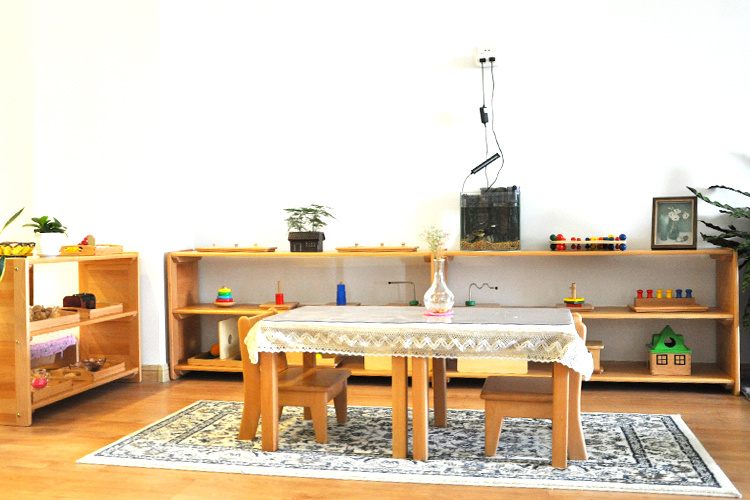
The Math area supports mathematical learning through activities such as counting, sorting and categorizing objects, creating patterns and graphs, and understanding the basics of addition and subtraction. Mathematics is an important part of our lives. It helps us understand the world around us, from simple addition and subtraction to the most complex equations. Mathematics is also used in many different fields including engineering, finance, physics, and economics. With its ability to solve problems and make predictions, mathematics can be applied to a variety of real-world situations. The history of mathematics dates back thousands of years when ancient civilizations developed systems for counting and measuring. Over time, these counting methods evolved into more complicated concepts such as geometry and calculus. Today, mathematicians continue to develop new theories and formulas that allow us to better understand our universe.
Lastly, the Cultural area introduces students to geography, science, history, art and music which encourages them to further explore their environment beyond the four walls of their classroom. Through these five areas of the Montessori classroom, children have the opportunity to develop skills that will serve them well for a lifetime. Culture is an essential part of any society, and it plays a key role in dictating the way people think, feel, and interact with one another. It can be composed of norms, values, customs, beliefs, and traditions handed down from generation to generation. It also dictates how people dress or behave in certain situations. Culture has tremendous impact on our daily lives as it shapes our perceptions and behaviors. From the way we greet each other to the food we eat, every aspect of life is affected by culture.
This is just one example of how an educational philosophy can be implemented in practice - within classrooms. If you are interested in implementing these methods into your own classroom or home learning environment then please speak with your local Montessori school or teacher for advice on how to make the most of the five areas. They will be able to provide you with further guidance and specific resources that can help you create an engaging and meaningful learning experience for your students.
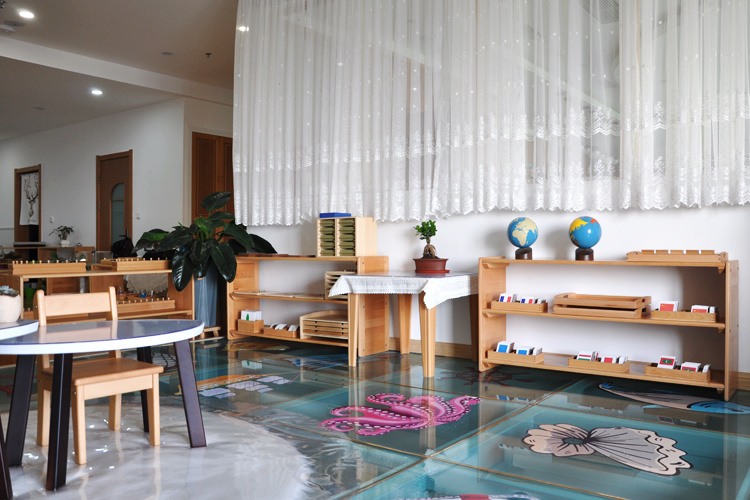
Thank you for taking the time to learn more about how Montessori classrooms are structured. We hope this information has been beneficial in helping you understand why these areas are important and how they contribute to a comprehensive educational experience for young learners.
Sensorial Play,Practical Life Area,Montessori Classrooms


Skype
Add
Liaoning Dalian
©2022 JOYSUN KIDS Porwer by www.300.cn dalian
©2022 JOYSUN KIDS Porwer by www.300.cn dalian