


How to Create a Montessori playroom?
release time:
2023-05-19 09:19
source:
How to Create a Montessori playroom?
The Montessori playroom is designed to foster a child's natural curiosity and creativity. It encourages exploration, problem-solving, and independent learning. The room features materials that are specifically designed for the Montessori method of education, which emphasizes active learning in a hands-on environment. The room typically has low shelves or tables with items like wooden blocks, puzzles, shape sorters, sand trays, paint supplies and other manipulatives. The Montessori playroom also provides children with opportunities to express themselves creatively through art activities such as painting, drawing and collage-making. Additionally, books are often available for children to explore their interests independently or during group storytimes. Dramatic play is also encouraged through dress-up clothes, puppets and props. The room also often includes a quiet area with cushions and blankets for children to relax or take part in activities like yoga and mindfulness. The Montessori playroom is designed to be welcoming and comfortable, creating an environment that encourages children's imaginations to run wild. It is typically arranged so that groups of materials are placed together for easy access by the children. This allows them to find what they need quickly and easily, allowing their creativity to flow freely without interruption from having difficulty finding resources.
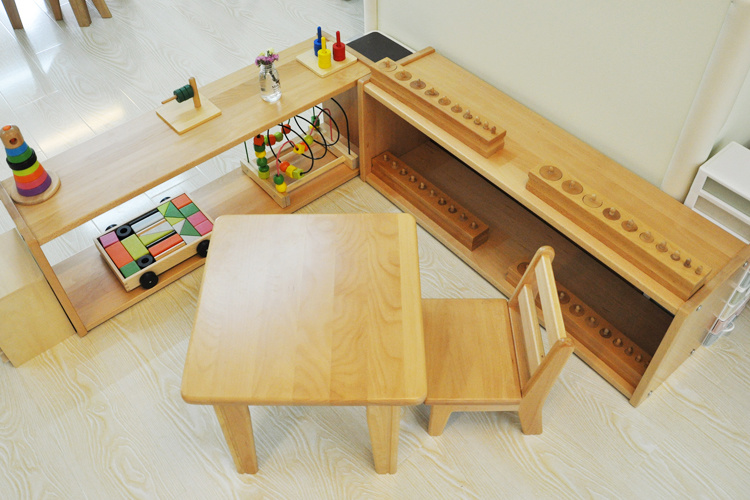
When creating a Montessori playroom for your children, one of the first steps is to select the furniture and materials. It's important to choose pieces that are sturdy, non-toxic, and age-appropriate. Look for items made out of natural materials such as wood or cotton. Avoid plastic toys with small parts as they can be a choking hazard. Shelves should have rounded edges and only display toys that are easy to grasp and manipulate.In addition to selecting items with safety in mind, it's also important to keep things organized. The goal is to allow your child to engage in independent play without feeling overwhelmed by clutter. Use baskets or crates labeled with pictures so your child knows where each item belongs when they are done playing with it.When you have everything in place, focus on giving your child ample time to play and explore. Offer them open-ended activities such as puzzles, art supplies, and blocks that allow for creative expression and problem solving. By allowing your child the freedom to explore their natural curiosity at their own pace, they will gain a greater understanding of their abilities and develop important skills for years to come. Finally, make sure you observe your child's behavior during playtime so you can ensure they are learning in an appropriate manner. Provide support when necessary but don’t take over–the Montessori encourages independence! With the right setup and guidance, your child’s Montessori playroom can be a great place for them to learn and grow.
Montessori playroom furniture typically includes tables, chairs, shelves, cubby units, dressers, beds, mats and rugs or carpeting. Tables are usually low enough for small children to stand at comfortably and should have rounded corners. Chairs come in different sizes and types including wooden, plastic or wicker chairs as well as stools. Shelves are usually adjustable so that they can be moved up or down to make room for different activities. Cubby units provide children with individual storage space for their belongings. Dressers offer plenty of drawers for storing clothing, toys and books. Beds are usually low-lying platform beds with a mattress on top; these are perfect for providing a comfortable sleeping area without the need of large furniture pieces taking up too much space. Mats and rugs should incorporate bright colors and interesting textures to help enhance the playtime experience.

Overall, the Montessori playroom provides a space where children can grow, explore and learn in an environment tailored specifically towards their development. In this way, it helps children to become confident, independent and responsible individuals who value the importance of learning.
Montessori Playroom,Encourages Exploration,Art Activities


Skype
Add
Liaoning Dalian
©2022 JOYSUN KIDS Porwer by www.300.cn dalian
©2022 JOYSUN KIDS Porwer by www.300.cn dalian